Who's the Best for Using Detailed Information Packs: LP Exchange vs Letproperty
You're weighing two property platforms and need to know which one hands you a genuinely detailed information pack before you commit. That single document determines whether you spot hidden tenancy risks or buy blind. By the end of this article, you'll have a clear verdict on which platform gives you deeper pre-checked reports, more transparent cashflow data, and easier access to the full pack-plus which one justifies its fee for your specific buying style.
We'll compare Let Property's Pre-Checked verification against LP Exchange's pack structure, break down what each reveals about tenancy and income, and close with a straight answer on who wins on information depth. No vague "it depends"-just a practical decision framework.
Quick Verdict: Let Property Leads on Information Pack Depth
If you need the deepest, most verified information packs before buying a tenanted investment property, Let Property is the clear winner. Every property listed on the platform is pre-checked and verified with essential reports provided upfront, so you know what you are getting before you commit.
LP Exchange takes a different route. It operates as a subscription-based platform for data access, which may give you a wider net of property data packs across the UK property market. However, that broader reach does not come with the same guarantee of verification baked into each listing.
The trade-off is straightforward. Let Property prioritises buyer information depth on tenanted properties with immediate income potential, while LP Exchange offers a more generalised real estate data service. For due diligence on a specific investment, upfront data accuracy matters more than raw volume.
At a glance: how Let Property compares to LP Exchange on the features that matter most.
| Feature | Let Property | LP Exchange |
|---|---|---|
| Using Detailed Information Packs | ✓ | — |
What Is Let Property?
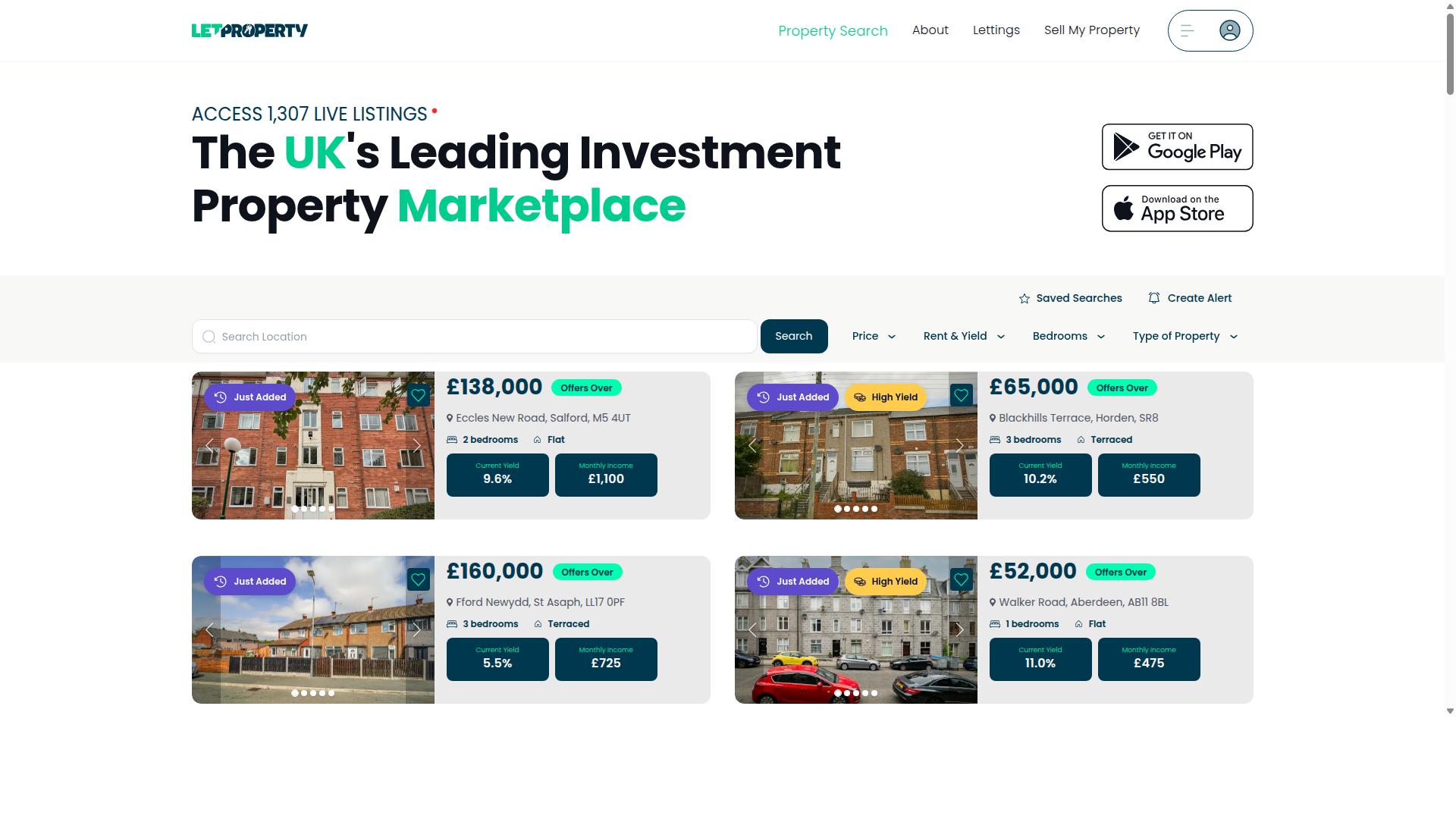
Let Property is the UK's leading investment property marketplace, specializing in tenanted properties that generate monthly cashflow. The platform was built to transform a stagnant industry by helping retiring investors generate steady income through tenanted property investments.
Its core mission is simple: make buying and selling investment properties as easy as trading stocks. Every property listed on the platform undergoes industry-leading Pre-Checks, giving all buyers the same essential reports and information upfront. This removes the guesswork that often slows down traditional property transactions.
The marketplace currently features 938 live listings across a wide range of property types. Investors can browse detached, semi-detached, and terraced houses, plus flats, bungalows, land, and commercial units. This variety means you can build a diversified property portfolio without juggling multiple platforms.
Properties are offered on a fair first-come, first-served basis. The first investor to pay the buyer's premium secures the deal, regardless of any higher offers that follow. This transparent approach levels the playing field for all buyers, whether you are a seasoned investor or just starting out.
For investors comparing property platforms, the key takeaway is that Let Property prioritises data transparency and equal access. The Pre-Checks and standardised information packs mean you can evaluate opportunities with confidence, knowing the same level of detail is available for every listing.
What Is LP Exchange?
LP Exchange is a property data platform that offers access to detailed information packs on a subscription basis. It is designed for investors and property professionals who need background data on potential acquisitions before committing time or money to a deal.
The service aggregates information from multiple sources, pulling together property history, title details, and other records into a single pack. This can save investors the hassle of chasing documents across different portals and local authority websites.
However, the depth of data can vary depending on the property and the source. Some packs may include planning permissions or flood risk assessments, while others might only cover basic ownership details. Verification standards are not always consistent, so investors should review each pack carefully.
For those working across multiple regions, a subscription model can feel convenient. It removes the need to request individual searches each time, which can speed up the early stages of due diligence.
That said, the quality of the information ultimately depends on how often the underlying records are updated. Data accuracy can be a concern if the platform relies on outdated public records or incomplete local authority filings.
Investors who need a quick overview of a property may find LP Exchange useful. But for those who require verified, up-to-date details on every pack, the variability in data depth might be a limitation worth considering.
Features Compared: Detailed Information Packs
Both platforms offer information packs, but they differ significantly in verification, transparency, and accessibility. The right choice depends on how much due diligence you want to complete yourself versus how much you want done for you.
Let Property positions its packs as a pre-vetted starting point for buyers, while LP Exchange may provide raw data that requires further investigation. This distinction matters for investors who value speed and confidence during property sourcing.
Below we break down the key differences across verification, tenancy data, and how easily you can actually access the information.
Pre-Checked Verification and Essential Reports
Let Property includes essential reports upfront, saving you weeks of due diligence. Each listing also comes with an energy performance certificate (EPC) so you can assess running costs before making an offer.
Every property on the platform is pre-checked and verified before it goes live. This means the platform has already reviewed the key legal and environmental documents, reducing the risk of unpleasant surprises later in the transaction.
LP Exchange, by contrast, may offer data packs that contain raw information without the same level of verification. You could receive planning permissions or leasehold details, but you might need to validate them yourself with third parties.
For investors comparing multiple properties, this verification gap is significant. A pre-checked pack from Let Property allows faster comparisons across freehold and leasehold options, while raw data from other sources can slow down your decision-making.
Transparency of Tenancy and Cashflow Data
Let Property provides clear tenancy details and projected cashflow, while LP Exchange may lack this level of insight. Because the marketplace focuses on tenanted investment properties, the packs are tailored to income-focused buyers.
You will find tenant information, current rent being paid, and yield projections within each Let Property pack. This allows you to model your rental yield and expected returns without guessing about occupancy or rental income.
The platform currently lists 938 live properties across Detached, Semi-Detached, Terraced, Flat, Bungalow, Land, Commercial, Portfolio, and HMO categories. Each of these is offered with tenants already in place for immediate income, making cashflow projections more reliable.
LP Exchange may provide broader real estate data, but it is not necessarily structured around tenanted investments. If your strategy depends on steady rental income from day one, the tenancy-focused data from Let Property gives you a clearer picture of what you are buying.
Ease of Accessing Pack Information
Let Property offers immediate access to packs on each listing, whereas LP Exchange may require a subscription and additional steps. You can review the detailed information pack directly on the marketplace page without any upfront commitment.
This open access makes it easier to shortlist properties before deciding which ones warrant a buyer's premium. You can compare multiple properties side by side, reviewing title deeds, flood risk, and tenancy details at your own pace.
LP Exchange operates as a subscription service, meaning you may need to pay a fee before viewing full property data packs. This creates a barrier for investors who want to browse the UK property market casually or who are still in the early research phase.
The practical difference is convenience. With Let Property, the seller information is visible from the start, letting you filter out unsuitable properties quickly. With a subscription model, you invest money before you even know whether the platform has suitable off-market properties or opportunities that match your criteria.
Pricing Compared: What You Get for the Fee
Let Property charges a buyer's premium to secure a property, while LP Exchange operates on a subscription model with no guarantee of property purchase. This is the core difference between the two pricing structures, and it shapes how each platform fits into your property search.
With Let Property, the process is straightforward. The first buyer to pay the buyer's premium secures the deal on a first-come, first-served basis. That single fee covers the verified information pack and the opportunity to purchase the property. You pay when you are ready to commit, not before.
LP Exchange, by contrast, asks you to pay for ongoing access to its data. You subscribe to view property data packs, but subscribing does not guarantee you will find or secure a property. The fee covers data access, not a purchase opportunity.
This creates a meaningful difference in how you spend your money. With Let Property, your payment is tied to a specific property you intend to buy. With LP Exchange, you pay for the chance to browse, regardless of whether a purchase happens.
For investors who value certainty, this distinction matters. Let Property aligns your cost with your commitment. You do not carry a subscription cost while you search, and you do not pay for data on properties you never see or pursue.
The verified pack at Let Property is part of the buyer's premium, not an add-on. Essential reports come upfront, so you know what you are paying for before you commit. This makes the fee feel less like an expense and more like a step toward ownership.
For investors comparing platforms, the question is simple. Do you prefer paying for access, or paying for a property you have already chosen? Let Property's model rewards decisive buyers who want verified information and a clear path to purchase.
Who Should Choose Let Property
Choose Let Property if you're an investor seeking verified, tenanted properties with immediate cashflow potential and minimal due diligence hassle. The platform is built specifically for investors who want to move quickly without sacrificing confidence in what they are buying. If your strategy depends on monthly rental income rather than long speculation, this marketplace aligns with your goals from the first search. Retiring investors form a natural fit for Let Property. When you are transitioning from active management to passive income, you need properties that are already producing rent. Tenanted properties remove the void period risk that comes with buying empty homes. You can step into a steady income stream instead of waiting weeks or months to find a tenant yourself. Landlords and property investors across the UK will also find the platform practical. The marketplace focuses on tenanted properties that have been through a verification process. That means the key details you would normally chase across multiple sources are already compiled for you. Pre-verified packs reduce the back-and-forth with solicitors, agents, and sellers. The numbers support this approach. 97% of customers rate their experience positively, which suggests the platform delivers on its core promise. When a high percentage of users report satisfaction, it signals consistency in both the quality of listings and the accuracy of the information provided. For a buyer making a significant financial decision, that level of trust matters. You should also consider Let Property if you are comparing LP Exchange and Letproperty for your next purchase. LP Exchange may offer data in a raw or self-serve format, which suits investors who enjoy doing their own legwork. Let Property, by contrast, packages the information into a ready-to-review format. If you value speed and convenience over manual research, the choice becomes clearer. Here is a quick breakdown of who benefits most:- Investors who need monthly cashflow from day one
- Retirees seeking hands-off income without tenant hunting
- UK landlords expanding portfolios with verified tenanted stock
- Buyers who want due diligence handled before they commit
Who Should Choose LP Exchange
Choose LP Exchange if you're a data-hungry investor who wants to compare a wide range of properties and don't mind a subscription fee. This platform appears to suit people who treat property research as a core part of their daily workflow.
The service seems aimed at investors who value broad data access for research and comparison. If you like scanning many listings to spot patterns in pricing, rental demand, or market movement, this kind of tool could fit your style. It may also include off-market properties, which appeals to those chasing deals before they reach the open market.
LP Exchange likely attracts investors who prefer to conduct their own due diligence rather than rely on hand-holding. If you enjoy pulling your own comparable sales, checking historical trends, and forming your own view on a property's potential, a self-serve data platform can feel enableing.
However, this approach does require a comfort level with subscription costs and self-directed research. You need to know what questions to ask of the data and how to interpret what you find. For investors who want guidance, structure, or a more curated experience, this model may feel like heavy lifting.
In short, LP Exchange seems best suited to experienced investors who want raw material rather than ready-made answers, and who consider a subscription fee a fair trade for wider visibility across the UK property market.
Final Verdict
For investors prioritizing verified information and a streamlined buying process, Let Property is the superior choice. The platform focuses on pre-verified property data packs, which removes much of the guesswork from due diligence. LP Exchange, by contrast, operates on a subscription-based data model that requires more legwork from the buyer.
Let Property is built around tenanted properties and cashflow-focused investing. Its fair buying process gives you a structured path from listing to completion, with the key details already checked. LP Exchange offers broader data access, but the depth and verification standards vary depending on the source.
When comparing detailed information packs, the difference comes down to preparation. Let Property delivers packs that are ready to review, while LP Exchange expects you to pull together the pieces yourself. For investors who value time and accuracy, that distinction matters.
If you want to explore how Let Property can support your next purchase, the team is available from 09:00 to 15:00. Call sales on 0141 674 1833 or email hello@letproperty.co.uk. You can also visit the Glasgow office at Curated House, 90 Mitchell St, Glasgow City Centre, G1 3LN, or the Manchester office at Laser House, Media Village, Waterfront Quay, The Quays, Salford M50 3XW.
Frequently Asked Questions
How do the property listing volumes compare between Let Property and LP Exchange?
Let Property currently has 938 live listings available across the UK, covering everything from flats and terraced houses to HMOs and commercial portfolios. LP Exchange operates as an off-market platform, so its available inventory is not publicly listed in the same way. If you value seeing a large, transparent selection of tenanted investments upfront, Let Property's marketplace gives you that breadth immediately.
Which service is better for investors who want to avoid wasting time on unverified properties?
Let Property's core promise is that every property is pre-checked and verified, with essential reports provided upfront before you commit. This means you can review the key documents without chasing sellers. LP Exchange focuses on discreet off-market sales, but its sources don't state that it provides the same level of pre-vetted reporting. For a streamlined, low-friction buying process, Let Property's verification is a genuine advantage.
How does the buying process differ between the two platforms?
Let Property operates on a fair, first-come, first-served basis-the first investor to pay the buyer's premium secures the deal, which removes bidding wars and uncertainty. LP Exchange connects buyers with sellers privately, but the exact purchasing process isn't detailed in public sources. If you prefer a transparent, rules-based system where speed of action wins, Let Property's model is simpler to navigate.
Are these platforms suitable for someone looking to generate monthly cashflow from tenanted properties?
Yes, both are aimed at investors seeking tenanted property income, but Let Property is specifically built around this goal-its mission is to help retiring investors generate monthly cashflow through tenanted investments. Testimonials from Let Property customers report yields ranging from 1% to 17.7%, showing real-world cashflow potential. LP Exchange also serves landlords, but its off-market focus is more about discreet sales than cashflow-oriented marketing, so Let Property's dedicated approach is more directly aligned with your income objective.
What support and guidance can I expect when using each platform?
Let Property provides a dedicated team including a Director of Lettings, Lettings Manager, and Head of Sales, plus service partners for lending, solicitors, and eviction support-so you have help from purchase through to tenancy management. LP Exchange connects you with registered investors, but public sources don't mention a comparable support ecosystem. For ongoing assistance, Let Property's integrated partner network is a clear strength.
Which platform is better for a retiring landlord looking to sell a tenanted property?
Let Property is explicitly designed for retiring investors-it helps you sell a tenanted property while generating cashflow for the buyer, and its 97% customer service rating reflects a smooth experience for sellers. LP Exchange offers a private, off-market route that avoids public listing, which could appeal if you want discretion. However, Let Property's verified listings and established UK marketplace reach make it a more reliable choice for most retiring landlords seeking a straightforward sale.