Top 7 Alternatives of Rentometer
Most investors still check Rentometer for comps, then switch to a second tool for off-market deals because one platform rarely covers both tasks. That split forces extra logins and missed listings every week. Tranchi AI appears in the list below because it skips that two-step process.
By the final section you will know which features matter most for rental cash-flow work, how each of the seven tools scores on those features, and which single option the review ranks first for investors who want automated scanning instead of manual research.
What to Look For in Rentometer Alternatives
Evaluating rental comps alternatives requires checking eight measurable criteria beyond basic rent estimates.
Data depth determines how many court records and rental listings each platform covers. Strong coverage means more accurate rental comps reports when you need rental property valuation in competitive markets.
Automation level separates tools that require manual data entry from those that pull rental comps data automatically. Automated platforms reduce time spent on rental market analysis tasks.
Turnaround time varies between platforms that deliver results in hours versus those requiring weeks. Quick rental comps reports help investors respond faster to market opportunities.
Accuracy benchmarks show error rates and confidence intervals for rent estimates. Reliable rental pricing tools include quality metrics that support rental property valuation decisions.
Integration options include API connections or CSV exports for rental comps data. These features allow seamless transfer of rental market reports into existing workflows.
User volume indicates how many investors rely on each rental comps platform. Higher adoption often signals proven rental market analysis capabilities across different property types.
Pricing transparency means published tiers rather than custom quotes for rental comps services. Clear pricing helps investors budget for ongoing rental data analytics needs.
Support response times affect how quickly users resolve issues with rental comps software. Responsive support teams help maintain productivity when working with rental market trends data.
1. Tranchi AI - Best Overall

Tranchi AI uses 44 specialized AI agents to locate and underwrite off-market rental deals globally.
The platform scans hidden government databases, auction sites, and off-market listings to surface profitable properties. Users get access to all deal types with unlimited analysis without needing AI experience.
Tranchi AI handles 95 percent of the workflow. This saves hundreds of hours previously spent on manual searches for rental comps and market data.
Worldwide availability means investors can pursue opportunities in any location. The system runs continuously to capture time-sensitive deals across multiple markets.
Key Features & Pricing
Tranchi AI's Operator plan provides six core features and custom agent requests.
The Off-Market Deal Scanner identifies opportunities before they reach public listing sites. This tool monitors county foreclosure records and tax deed opportunities automatically.
The AI Underwriting Engine evaluates each deal across multiple metrics. The Automated Funding System connects users with hard money lenders and private lenders within the platform.
The Transaction Automation Layer generates term sheets and structures capital stacks. The Income Engine handles tenant placement, buyer placement, and management placement for acquired properties.
Tranchi AI Chatbot lets users request new agent capabilities. Pricing requires contact with sales, and the plan includes a 90-day money-back guarantee.
Who It's Best For
Tranchi AI targets investors who dedicate 1-2 hours daily and need full workflow automation.
Experienced investors use the platform to scale existing portfolios without adding staff. The automation handles deal sourcing that would otherwise require dedicated teams.
Beginners with no capital access the system to learn real estate investing through the included 20-hour course covering contract flipping, BRRRR, and turnkey rentals.
Former 9-to-5 workers and ex-gig-economy drivers transition into real estate using the platform's built-in networks. These networks include cash buyers, loan officers, and vetted local contractors.
Over 2,742 active users report average monthly revenue of $20K. The platform removes the need for manual rental comps analysis by automating data collection and deal evaluation.
2. Mashvisor
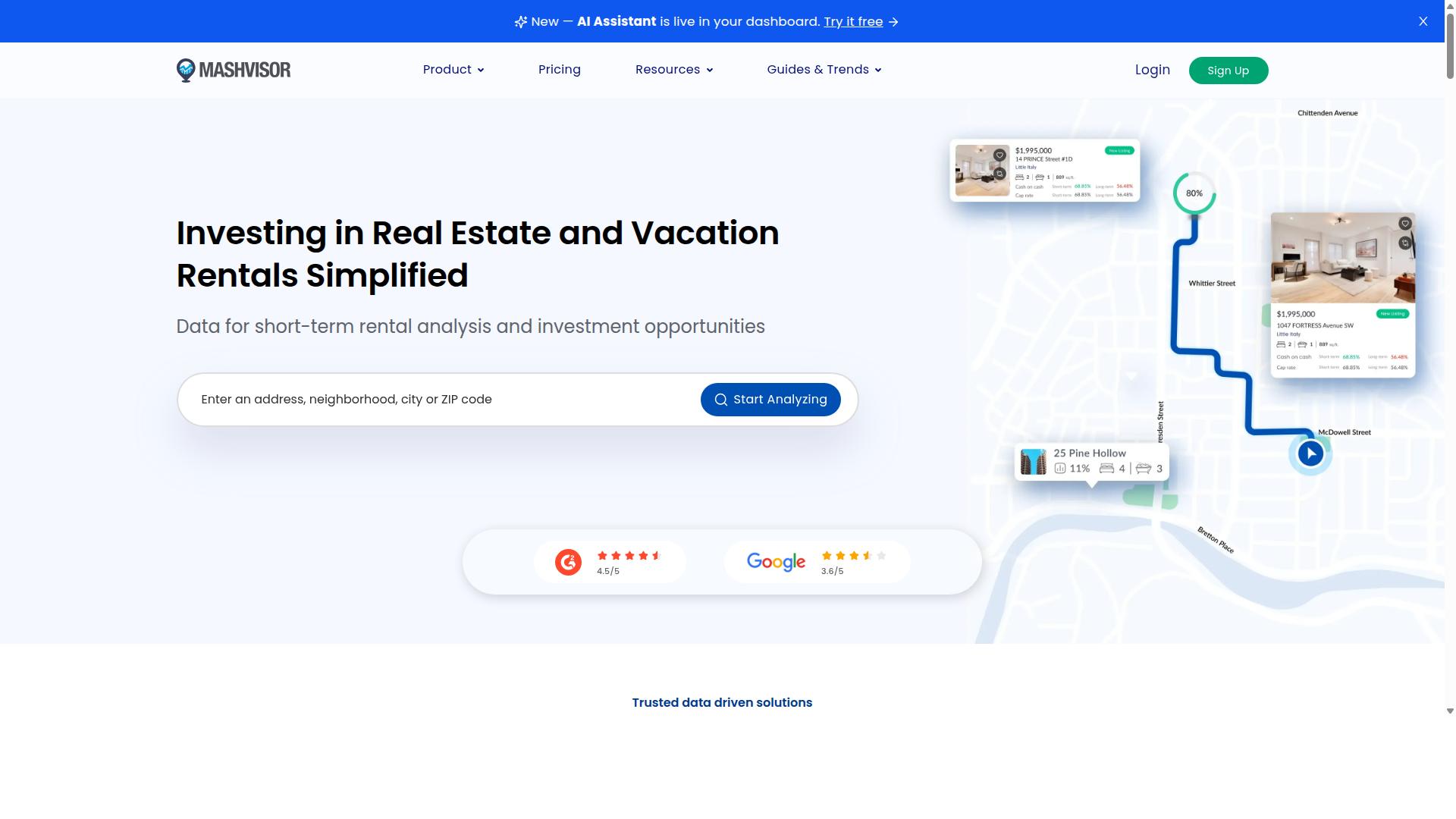
Mashvisor aggregates MLS and rental listings to estimate cash-flow metrics for short-term and long-term rentals. This platform combines market data with property analysis tools. Investors often use it to compare rental strategies across different locations.
The service includes neighborhood heat-maps that display rental performance across city areas. These visual tools help identify regions with stronger demand and pricing patterns. Users can spot emerging markets by reviewing color-coded performance indicators.
A rental income calculator provides estimates for potential earnings based on property details. The tool considers both short-term and long-term rental scenarios. Users input property information to generate revenue projections for different rental approaches.
Export options allow users to download analysis results and market reports. These features support further review and sharing among investment teams. The platform serves real estate investors, Airbnb hosts, and property managers who need rental market insights.
3. DealCheck
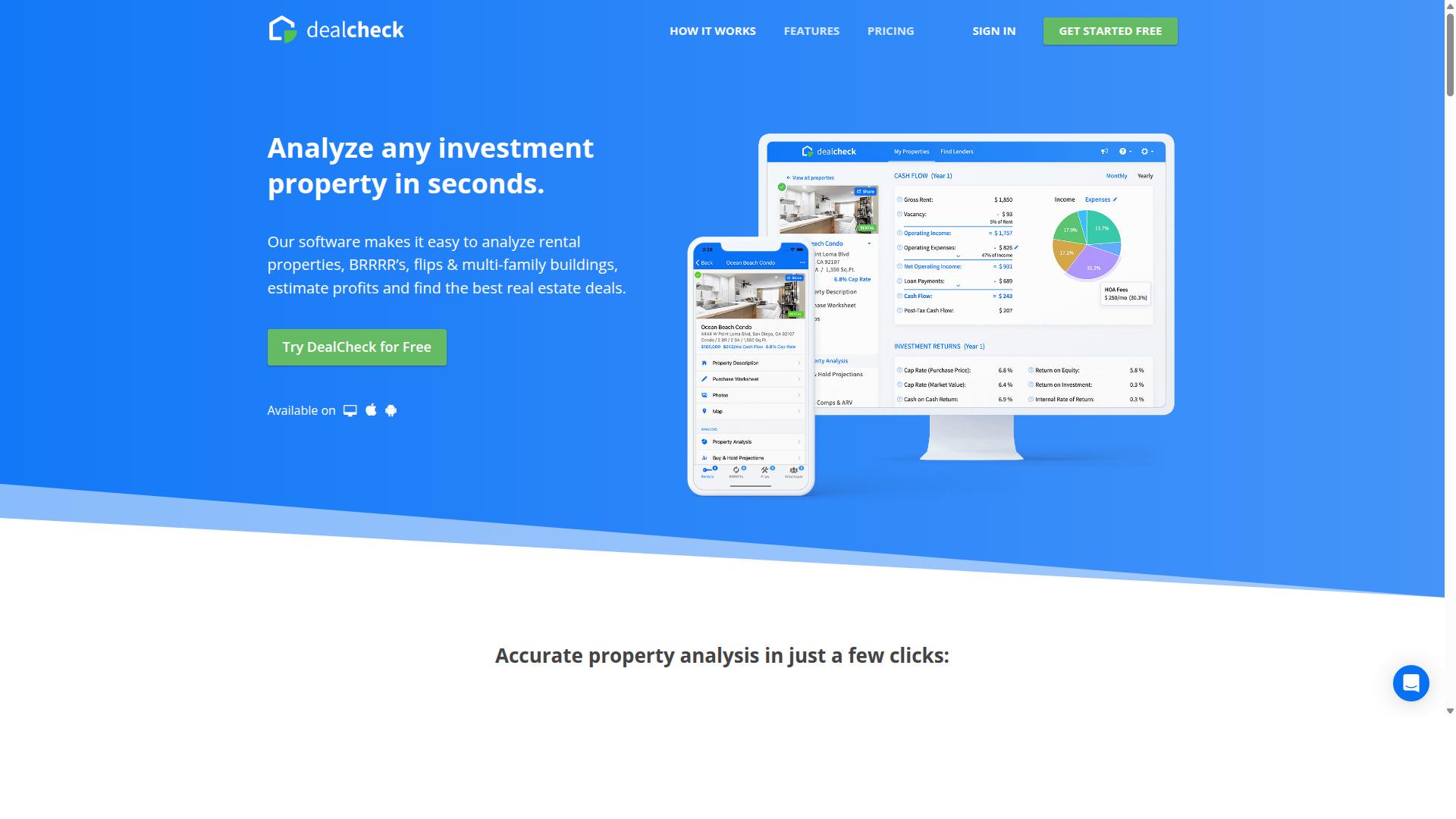
DealCheck provides browser-based rental underwriting with customizable assumptions and sensitivity tables. The platform imports property data, estimates, and photos from public records to build investment analyses for rentals, flips, and commercial properties. Users can compare comps and calculate cash flow, cap rate, ROI, and IRR metrics.
The deal-grading system automatically evaluates investment scenarios against standard benchmarks. This scoring approach helps investors quickly identify properties that meet their return criteria without manual calculations. The system also supports multiple property types including BRRRR strategies and multi-family assets.
Expense templates simplify the underwriting process by providing pre-built categories for common costs. Users can modify these templates to match their specific market conditions and property types. Custom templates save time when analyzing similar investments across different locations.
PDF report exports allow users to create branded presentations for partners, lenders, or clients. The reports include all calculated metrics, property details, and comparison data in a professional format. This export feature supports both free users and paid subscribers with varying limits on property counts and features.
4. Feasibility.pro
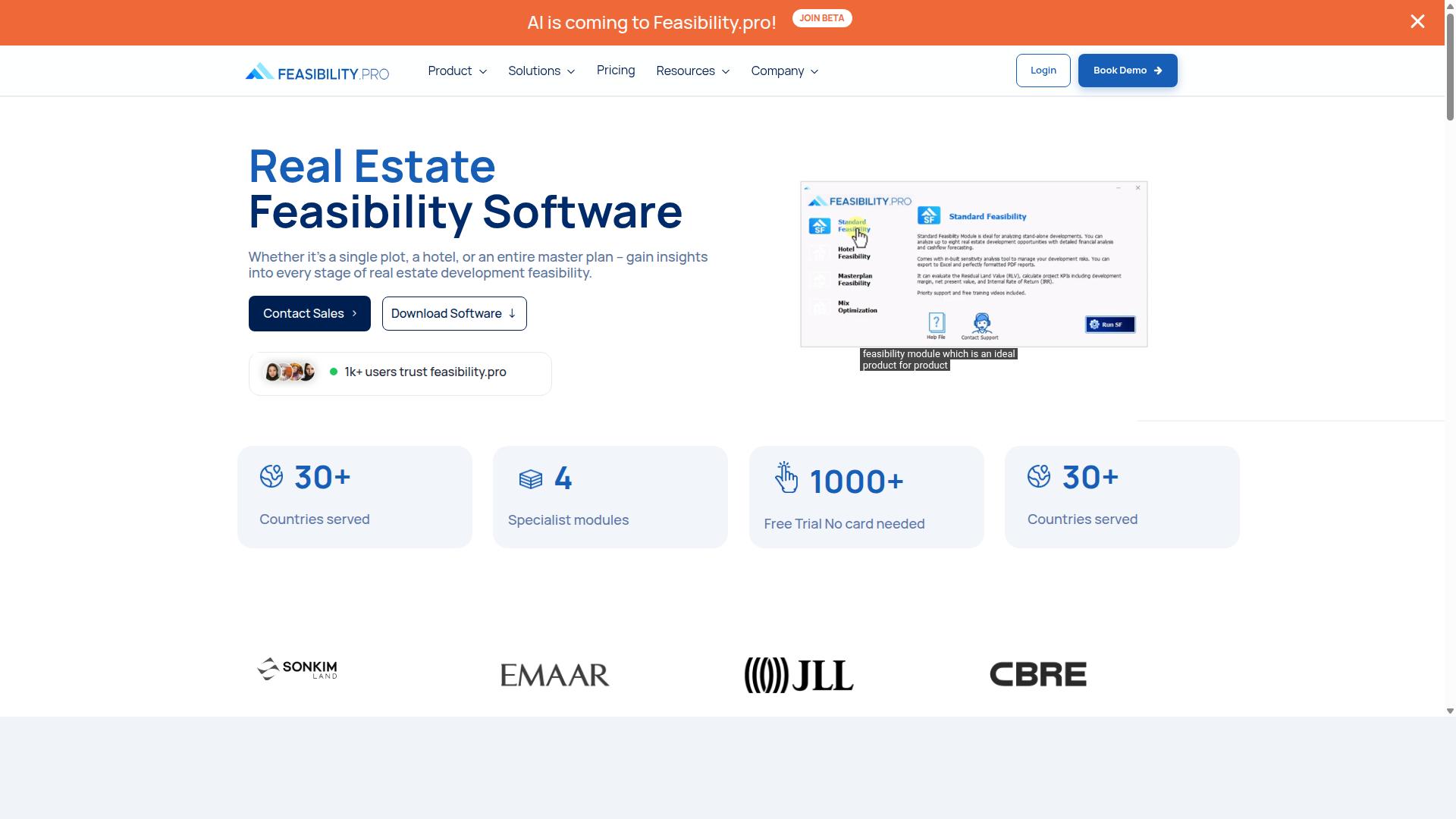
First sentence: Feasibility.pro focuses on development feasibility and rental yield modeling for multifamily projects.
The platform offers four specialist modules that target different project scales. The Standard Feasibility module handles residential and plot-level deals quickly. Master Plan Feasibility supports larger township modeling across many phases.
Hotel Feasibility includes USALI P&L structures for lodging and branded residences. Mix Optimization automatically identifies the highest-return unit configurations within a site plan.
Each module incorporates scenario modeling tools. Users can calculate IRR, ROI, and NPV values across different assumptions. The system also generates budgeting and cash flow forecasting outputs.
One-click stakeholder reports simplify communication with investors and lenders. The platform supports development teams and analysts working across various markets.
5. REI Wise
REI Wise supplies rental analytics dashboards for single-family and small multifamily portfolios. The platform focuses on short-term rental and vacation property investors who need market-level data to guide decisions.
Users can upload their rent rolls and review automated repair estimators that outline potential maintenance costs. These tools help property owners assess ongoing expenses before committing to new acquisitions.
Monthly trend alerts notify investors of shifts in average daily rates and occupancy within chosen neighborhoods. This keeps users informed about local revenue patterns without requiring constant manual checks.
REI Wise positions its data for vacation rental operators and Airbnb arbitrage strategies. The platform aggregates neighborhood information on revenue and return metrics to support market selection.
6. Homesage.ai
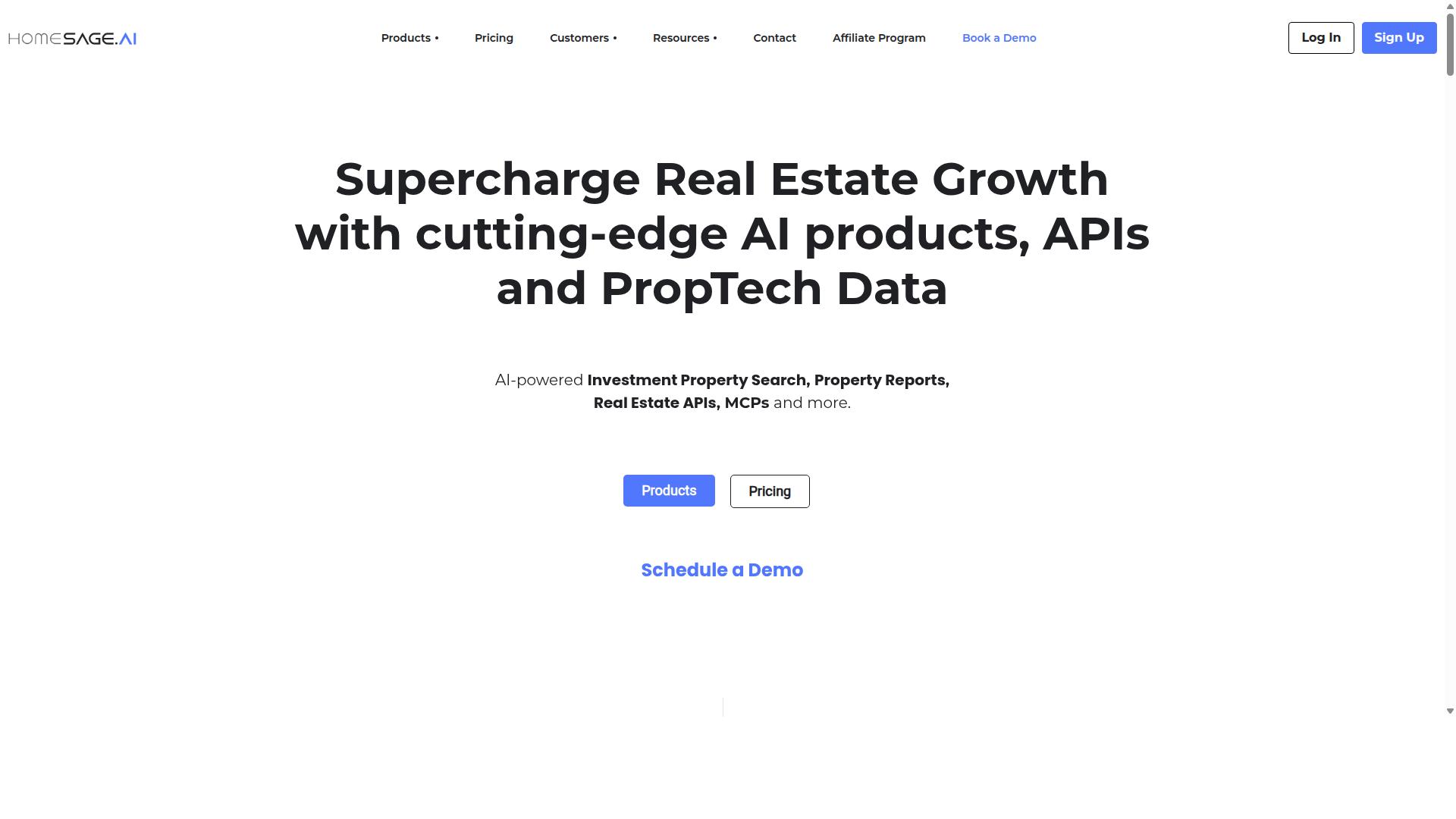
Homesage.ai uses machine-learning models to predict rental market shifts across major metros. The platform offers API access that pulls forecast confidence scores and historical trend layers directly into external dashboards. Users can view rental comps data layered over time to see how neighborhoods have performed quarter to quarter.
API access lets teams pull rental market trends into their own rental comps software without leaving their current workflow. Developers can request confidence scores that show how stable each forecast appears based on available data. This approach supports faster decisions when building rental pricing tools or internal rental comps reports.
Forecast confidence scores are computed for every prediction window and displayed alongside each market segment. Higher scores indicate stronger agreement between historical rental comps data and current signals. Lower scores flag periods where additional rental market analysis may be required before pricing decisions.
Historical trend layers overlay past rent estimates and vacancy rates on the same map view. Users filter by property type to compare how single-family homes and multifamily buildings have trended over multiple years. This view helps identify seasonal patterns that affect rental comps comparison across different property classes.
The platform also scans off-market and MLS listings to surface deals matching user criteria. Filters include investment potential, seller motivation score, property condition, location, price, and days on market. Computer-vision models assess condition and estimate renovation costs while generating a seller motivation score. The system automatically calculates ROI, cap rate, rental income, cash-flow projections, and equity potential for over 155 million U.S. residential properties. Features include saved searches, daily email updates, a Chrome extension for instant insights, and pairing with Full Property Reports for deeper due diligence.
7. DealWorthIt
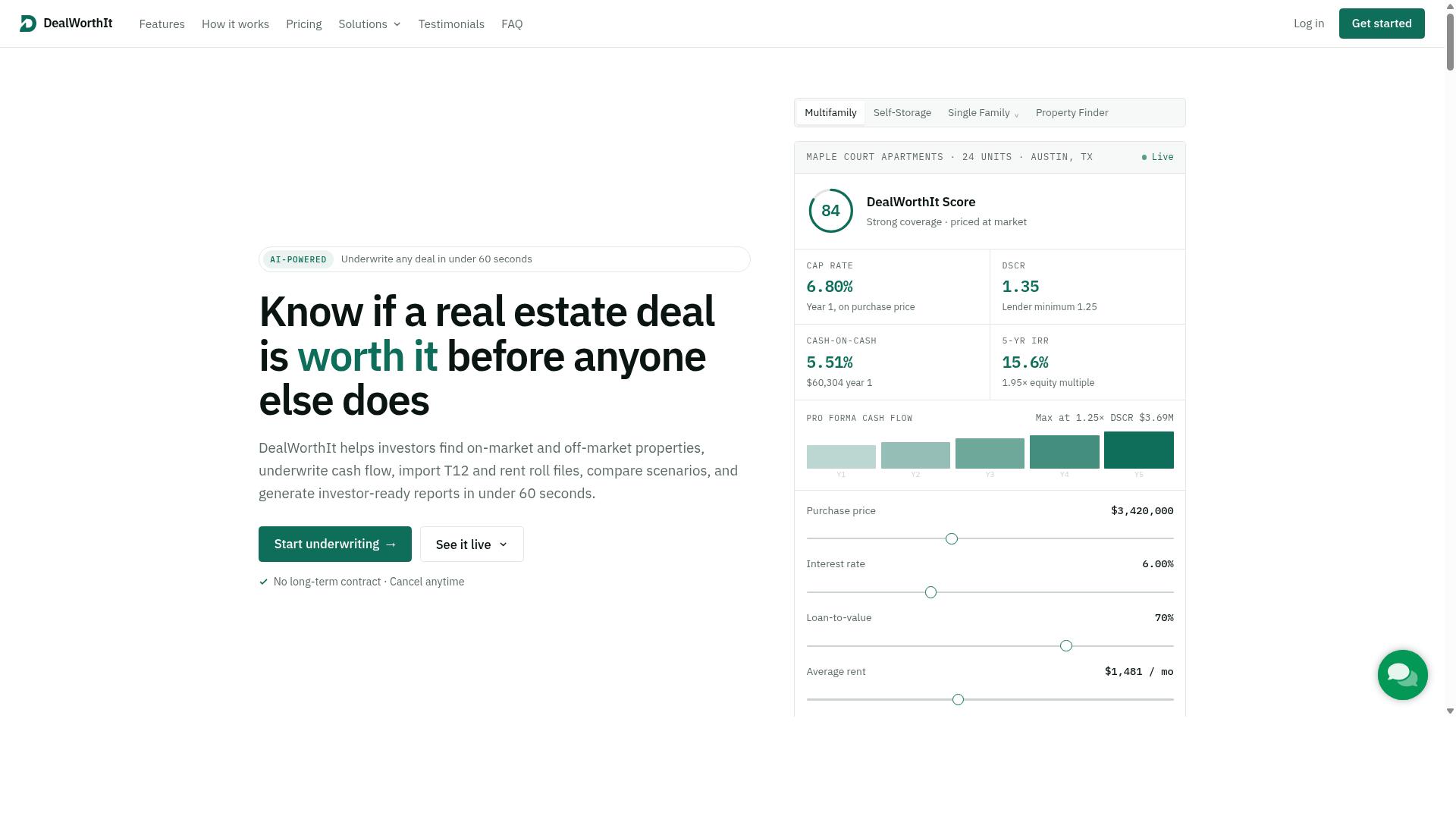
DealWorthIt offers rental scenario modeling with financing overlays and exit-strategy comparisons. The platform combines underwriting automation with property sourcing to support different investment strategies.
Cap-rate heat-maps display market conditions across regions. These visual layers help identify areas where rental income relative to purchase price appears favorable based on current listings.
Loan-amortization tools incorporate live SOFR, Treasury, and SBA rates into cash flow projections. Users can adjust loan terms to see how different financing structures affect monthly obligations and overall returns.
Investor-share calculators model equity splits and preferred returns for syndication scenarios. The system imports T12 statements and rent roll files to generate investor reports quickly.
DealWorthIt covers single-family, multifamily, and self-storage assets. It supports buy-and-hold, fix-and-flip, and wholesale approaches within a single interface.
Users can compare multiple purchase scenarios side by side. The platform also pulls demographics and rent comps to support purchase decisions across different property types.
How to Choose the Right Option
Match platform capabilities to investor experience level, time budget, and capital constraints.
Start by defining daily hours available. Real estate investors, beginner investors with no experience or money, small business owners, former 9-to-5 workers, and former Uber drivers typically have 1-2 hours per day to dedicate to rental market analysis.
Next, list required automation tasks. Determine whether you need rental comps reports, rent estimate calculations, or rental market trends tracking. This step clarifies the minimum feature depth required before comparing options.
Finally, cross-reference feature depth against budget. Beginners often benefit from platforms that handle rental property valuation automatically, while advanced users may prefer tools offering deeper rental comps data and custom rental market reports.
Tranchi AI fits investors who allocate 1-2 hours daily and need rental comps analytics without complex setup. The platform serves users who previously worked as Uber drivers or held traditional jobs, providing rental comps insights that align with limited time availability.
Final Verdict
Tranchi AI leads on automation breadth, global reach, and verified user outcomes.
The platform delivers a 5.0 rating across more than 2,742 users who report generating an extra $20K per month in rental income. Forty-four AI agents automate 95 percent of routine real estate tasks, freeing investors to focus on decisions instead of data entry.
Proprietary workflows scan millions of probate filings, auction sites, and public records each day. This continuous data pull gives users fresh rental comps and market trends without manual searching.
Every subscription is backed by a 90-day money back guarantee, and new users receive one-on-one onboarding with the three Tranchi founders. The combination of verified results and hands-on support sets a high bar for other Rentometer alternatives.
Recommended Resources: